Victor Ireland speaks...
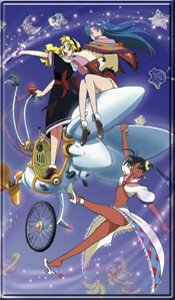
We recently had the pleasure of chatting with Victor Ireland of Working Designs. Here's what he had to say about the Lunar series...
PSi: Is there more behind releasing the Lunar series for the PSX besides widening the audience, considering the limited number of people that had SegaCDs?
VICTOR: The biggest reason for releasing LUNAR on the PS platform was to reach the widest possible audience and allow the series to grow. It's an unbelievable series, as I'm certain you already know, and just the fan word of mouth from the SEGA CD version was incredible. But most people had only heard of the game or heard that it was good, or heard of someone that heard it was good, etc. The PS version was the first time a significant amount of people had a chance to experience it for themselves. Now, all the people that fell in love with the LUNAR universe with LUNAR:Silver Star Story Complete can revisit that world in LUNAR:Eternal Blue Complete with a new cast of characters that are tied to the first story. It's one of the few RPG series that have intended continuity, and I think that's one of the reasons LUNAR is so great. But, I've drifted from the original question, haven't I? Oops.PSi: Working Designs scripts are known for their concentration on getting the emotion or idea across and being less concerned with the exact translation. Is it more or less difficult to do a game this way, instead of the traditional "word for word" method?
PSi: You often tweak games from their Japanese releases to adjust their difficulty or add new features. This requires some coders. Have you ever thought of using those coders on, say, a game of your own?VICTOR: Much more difficult. To put emotion and feeling in a text sentence and have it touch people in a real way is really hard to do. Anyone can do a straight translation. And, by doing a straight translation, generally the original intent and mood of the piece is lost. To understand the mood, emotion, and feeling of a piece and convey that to a completely different mass audience in a completely different culture is quite difficult. We're not perfect at it, but we are continually closing in on the goal.
PSi: How do you choose the games you bring over? Is it what appeals to you?VICTOR: It's constantly batted around, but the fact is that our crew now is very happy doing what we do, because we all share a love of Japanese games, and there's always more to do than we have time to do ourselves, so we seem never to run out of "wish list" games. It may be done in the future, but we're not in any rush at the moment.
VICTOR: Well, RPG's, first and foremost, are a big appeal. As far as game qualities, a good story will generally win me personally over before drop dead gorgeous graphics. Of course, the graphics have to be at least *good*, but the first thing that generally grabs me is the story. Character design is also a factor, but less than story. After that, there are a lot of considerations, not the least of which is what kind of games are our fans asking for? Sub-genres within RPG's tend to go in cycles, so we may have a spell where we only release menu-driven RPG's and people start writing asking for another strat-RPG or Action-RPG. We look at what's available and try to accomodate the requests.PSi: Most of your games have English dubs of the original Japanese spoken parts. Why do you dub the games, instead of simply subtitling them?
VICTOR: Because, aside from very specific cases, subs would sell less. The general audience prefers dub to sub, and like it or not, at least a portion of the general audience has to buy games to make them successful. If we actually brought a game like Kessen or Samurai Shodown RPG to market, we would consider dubbing because it would add to the authenticity of the game, since they're steeped in Chinese and Japanese culture in a specific historical period. However, for games like LUNAR or even Magic Knight Rayearth that are timeless or contemporary, subbing would be a distraction for most people outside anime fandom, and that's true of most cases. It's why you don't see that done for the game market in general. To keep making games, you have to sell them.PSi: How long does it usually take to prepare a game for release here, once you've got it to work on?
PSi: What next-generation systems are you looking to develop for other than the PS2, if any?VICTOR: Depends on the game. Something like a shooter may take only a month or two to convert and test and another few to package and market. Generally speaking, an RPG will take 12-18 months. There have been exceptions, but usually that's due to game-specific problem circumstances.
VICTOR: Currently our focus is Playstation and Playstation 2. That said, I'm glad to see that Nintendo has finally stepped up to the plate and ditched carts on the GameCube. Of all the upcoming systems, that's the one that interests me the most.
Interview by
Sunfall to-Ennien
(AKA Phil Bordelon )
(AKA Phil Bordelon )